Latinas in STEM
  • About Us
  • News
  • Events
  • Resources
    • Parent Resources
    • Teacher Resources
    • Professional Resources
  • STEM Journeys
  • HOW TO HELP
  • Merch Store
  • Membership
  • MEMBERS ONLY
    • Featured Opportunities
    • Volunteer Opportunities
    • Latinas Esquina
  • Contact
  • Barbie Dream Gap
  • New! 2026 Internships

My STEM Journey- Isha Renta, Management and Program Analyst with the National Oceanic and Atmospheric Administration (NOAA)

12/14/2020

0 Comments

 
Picture
​As a child on the island of Puerto Rico I was always curious about animals, insects, plants, trees, and many other things related to nature.  When Hurricane Hugo (1989) threatened to impact the island, I was impressed by the satellite images and graphics presented on TV. I wanted to know more about what it was, why should we prepare and moreover why everyone was so scared? That is the moment when my curiosity and dream of becoming a meteorologist was born. The constant threats of tropical cyclones to Puerto Rico kept me on my toes every season as I grew into a teenager and fueled my interests into high school. I remember looking for maps in the newspaper to track the position of the storms and paying lots of attention during the weather segment on TV. In 1998 Hurricane Georges made direct impact to my home island further reinforcing my fascination with weather and passion to protect and inform citizens.
 
I was a diligent student in school who loved the challenge of math and always ensured I maintained good grades. I was driven by the dream of working with the experts at the National Weather Service’s (NWS) San Juan Forecast Office. Upon graduation, it was time to apply to college and I knew exactly what I wanted to do.  However, to my surprise, there were no meteorology degrees available in Puerto Rico. Devastated, yet undaunted, I had to rethink my college choices. I started on the social sciences path at the University of Puerto Rico, but quickly realized that I was not enjoying those classes. Seeking something that aligned with my skills, I changed to a degree in mathematics which turned out to be the best choice I could have made. I struggled with the chemistry classes, but enjoyed my calculus, physics and especially differential equations. I pushed myself beyond what I thought my capabilities were. I enrolled in the harder classes, and had some doubt and stumbles along the way. But I sought help from the professors when I needed it and they were always there to reassure me and encourage me.
 
While in college, I found out about a group doing weather and climate research and quickly joined them. Through them I learned about weather, modeling, and research and attended my first conference. I also learned about other opportunities such as graduate school and summer internships which turned out to be the key turning point in my career path. The upcoming summer I was admitted to the National Oceanic and Atmospheric Administration’s (NOAA) Educational Partnership Program - Undergraduate Scholarship Program. With this scholarship, I was able to intern in two different NOAA facilities for 10 weeks during the summer. One was the Environmental Modeling Center in Maryland, and the other one in the Hurricane Research Division (HRD) in Florida. During this time I was also admitted to the graduate program in Atmospheric Sciences at Howard University in Washington, DC.  Finally, my dreams were becoming reality. 
 
I returned to HRD for two additional summers while pursuing my graduate degree, also participated in internships at the National Science Foundation and the NWS Baltimore/Washington Forecast Office, and spent 30 days at sea in a NOAA research cruise. All these experiences were a great foundation for my first full time job with the Department of the Navy at the Naval Surface Warfare Center Dahlgren Division as a Research Meteorologist. There I worked on modeling and observations of the low levels of the atmosphere and also set up weather stations at Navy facilities during testing of new radar technologies, among other tasks. I then returned to the NWS Baltimore/Washington Forecast Office, but this time as a full time meteorologist where I would do weather forecasts, give briefings and interviews, issue watches and warnings, and plan or attend outreach events for the community and our media partners. This was my dream job since I was a child, a different location but with the same mission, and I was on the top of the world. 
 
Around the same time I began working on my non-profit organization Semilla Cultural (semillacultural.org) or “cultural seed”, to promote and preserve the Afro-Puerto Rican genre known as ‘bomba’.  Bomba, a combination of dancing, singing, & percussion, is important to me as it gives me a vehicle to bring Latin culture and positivity to the forefront of society. Through this adventure I developed and polished leadership and other soft skills that would be useful in my scientific career path. Still growing and always looking for more challenges, I decided to apply for a position at the NOAA Office of Oceanic and Atmospheric Research as a Management and Program Analyst for which I was hired. In this role I manage critical programs, lead people, am involved in the science policy process, and perform research and development analysis.  It is yet another step in my journey and I am enjoying every minute of it. 
 
Being rooted in public service, there are several things that set the meteorology field apart. One of these is the schedule and it can be difficult for some. While in the NWS Forecast Office, I worked on a rotating shift schedule, meaning that I did not have a consistent schedule. Sometimes working weekends, holidays and overnight shifts was challenging, especially as a mother of two little girls. There are also challenges that you get as a forecaster with the rapidly changing weather and the high pace push to get information and warnings out immediately. But that stress also brings a great feeling of satisfaction from serving the community and partners. That gratification is invaluable and simply irreplaceable.
 
The public service aspect of the meteorology field also brings about cultural matters, especially when your culture allows you to see things differently and you can identify barriers. Many of us come from an area where English is the second language, and I am no exception. While at the forecast office I noticed there were no services or collaborations with the Hispanic community. I used my cultural knowledge and took the initiative to connect with local Spanish media, attended Hispanic community events, and created a website with weather and safety information in Spanish (weather.gov/lwx/espanol). Now this community has access to hazardous weather and safety information in their own language (with still things to improve). In this instance, being a Latina in STEM paid off. The diversity I brought to the team removed a barrier from part of the citizens we serve.
 
One thing that was immediately apparent in the workforce was the lack of diversity in this field, particularly females, and especially Latinas. I am a strong believer that representation inspires youth. You can show them that someone like them can achieve what you have, and make them feel welcome into this field. Also, having a more diverse workforce can harvest diverse solutions and ultimately improve services (published studies have demonstrated this). I enjoy doing my part to inspire Latinas through outreach. I cherish the opportunity to visit schools or events where others can see and listen to the experiences of Latina woman scientist. Being able to speak and answer questions provide experiences that, both the community and I will never forget, even more when they can identify with you. 
 
My path has not been straightforward, I have doubted myself and my decisions, and I have struggled. But I suppressed those doubts and I remained focused on my goal of becoming a meteorologist. My journey has been supported and inspired by amazing leaders, colleagues and mentors in the field, and by my family and friends as well. To them, I owe a lot for who and where I am today, and for that I am eternally grateful. As a Latina, I am committed to my purpose of paying it forward through mentoring and serving the community through science and culture. It is my goal to see many other women, especially Latina women, in this field.
0 Comments

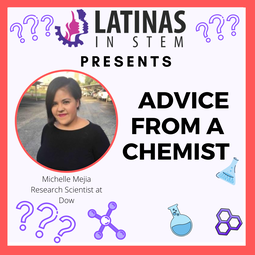
Consejos: Advice from a Chemist

8/31/2020

0 Comments

 
Picture
Where could I make the biggest impact if I want to become a professor and promote URMs in STEM?  Regardless of whether you go into academia or industry, there are different ways that you can promote other Latinas.  Mentoring is very important- share your experience with others and mentor others that are interested in STEM.  Be involved with organizations at your university/company that work to lift up underrepresented groups- these are great avenues to work with students and colleagues and share your experiences.  Talk to others not only about your success, but about your struggles.  I also think it is important to share any resources you may have- if you are working in academia look for opportunities to help underrepresented students to find internships or research opportunities.   When I was an undergraduate, I didn’t know that I needed to be doing research or that there were programs to pay for my GRE’s until I spoke to a teaching assistant and they shared their resources with me. 

Which careers can I pursue with a degree in chemistry?  Most people think a degree in chemistry means you are in a lab wearing a lab coat, but there are so many options.  A degree in chemistry means you can: teach, do research at national labs, develop new materials for food packaging, develop new cosmetic formulations, or work in a forensics lab.  You can also work to examine minerals and rocks, work for oil companies, or work for automobile companies and tech companies.  Chemists are needed on every aspect of our lives- from new materials to final products.  We have a blog post that highlights this a bit more, check it out!

 Do you enjoy what you do? Why?  I love what I do.  My job gives me a variety of projects to work on.  I work as an analytical chemist for a materials company and therefore I get to work on everything from raw materials to final products (things we use in everyday life).  This makes my day-to-day responsibilities and job interesting, as every day there is a new problem to solve.  I have the ability to work on customer issues, long term R&D projects, and to innovate. 

 Have you had a manager who was not a chemist? What did they do well? What could they have done better? No, however I have had managers that do not have a background in the techniques and chemistry that I work on.  I used it as an opportunity to share with them the techniques and as an opportunity for me to discuss why my projects and techniques were important.  At first they didn’t understand all aspects of my job, but they were open to learning and always asked questions, which made for good conversations.  I think it is important to remember (not only for managers), that we need to be open to learning.  It doesn’t matter if it’s been 20 years or 1 year in a company/group, you can always learn something.  My manager was open to learning from me and that made for a good work environment. 

How did you choose your career?  After my first year of graduate school, I knew I wanted to go into industry- I loved being in the lab making new compounds and analyzing them.   As I was wrapping up my third year of graduate school, I started to research companies and was looking for somewhere that I could still be in the lab and be pushed to innovate.  I am thankful that I have found that and thatI enjoy my job. 
​

Chemicals have a bad rep; Are all chemicals bad?  No, the good chemicals are often overshadowed by the bad chemicals.  Yes, there are some things out there that no one should ever be exposed to, however chemicals are all around us.  The aspirin you take for a headache, the non-stick pan you cook on, the bag your cereal comes in, and water- these are all chemicals.  There is no way to live a chemical free life because everything around us is made of chemicals. 

How can I make chemistry fun in the classroom?  I knew I wanted to go into chemistry because of my high school teacher.  She made sure to relate our experiments and discussions in the classroom to everyday life.  We did experiments such as testing the amount of citric acid in juice, or measuring copper in a pre-1982 penny and comparing it to a post 1982 penny.  She took the theories and made them applicable to life outside of the textbook, that is what made it fun for me.
0 Comments

What is Chemistry?

8/3/2020

0 Comments

 
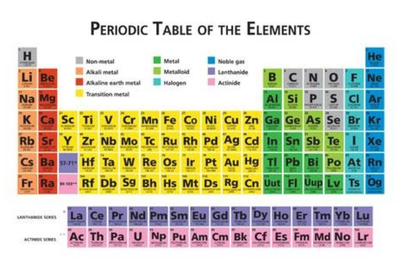
Chemistry is all around us- it is the gasoline we put in our cars, the batteries in our smartphones, and in the medication we take when we are sick. The study of the elements of the periodic table and how the elements combine to form compounds and materials with new properties is Chemistry.  These fundamental building blocks have been discovered by scientists in nature or have been created in a laboratory.  

There are five branches of chemistry: 
Analytical- focused on identifying and measuring physical and chemical properties
Physical- the study of how matter and energy interact
Organic chemistry- chemistry based on carbon containing compounds
Inorganic chemistry- the study of materials that contain metals
Biochemistry- the study of biological processes.  

Within these five branches, there is a broad array of fields- food chemistry, geochemistry, environmental chemistry, pharmaceutical chemistry, agricultural chemistry, the list goes on. 
Chemistry helps us understand the world we live in-it explains why soap works to clean our dishes, or why you have to add baking powder to a cake recipe.  Studying chemistry can open a lot of opportunities in fields ranging from cosmetics to automobile, fashion to food.  

Stay tuned for more this month, as we explore chemistry's potential career opportunities, it's importance in our everyday lives, offer resources for starting a career in chemistry and even feature some advice from a real life chemist! 
Picture
0 Comments

Free Webinar: Science meets Cosmetics

10/17/2016

1 Comment

 
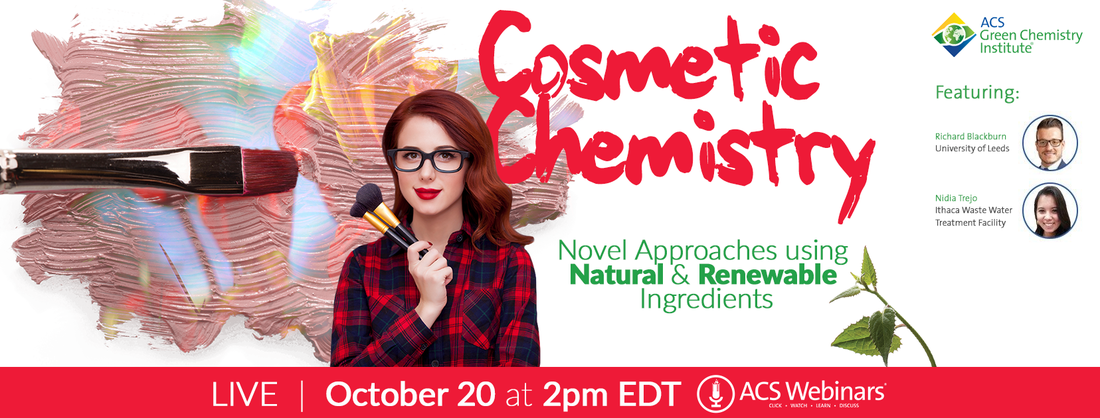
Learn the chemistry behind natural cosmetic products with Richard Blackburn, associate professor at University of Leeds and founder of Keracol Limited, and Nidia Trejo of the Ithaca Waste Water Treatment Facility  on Thursday, October 20 at 2pm ET.   Nidia is also Director of College of Programming for the Latinas in STEM Foundation.
Register
Picture
1 Comment
Forward>>

    STEM JOURNEYS

    Archives

    February 2026
    January 2026
    December 2025
    November 2025
    October 2025
    September 2025
    August 2025
    July 2025
    June 2025
    May 2025
    March 2025
    February 2025
    December 2024
    November 2024
    October 2024
    September 2024
    August 2024
    July 2024
    June 2024
    May 2024
    April 2024
    March 2024
    April 2022
    December 2021
    November 2021
    October 2021
    August 2021
    June 2021
    May 2021
    April 2021
    March 2021
    February 2021
    January 2021
    December 2020
    November 2020
    October 2020
    September 2020
    August 2020
    March 2019
    October 2018
    September 2018
    December 2017
    July 2017
    April 2017
    February 2017
    November 2016
    October 2016
    September 2016
    August 2016
    June 2016

    Categories

    All
    Careers
    Consejos
    Education
    Engineering
    Events
    Mathematics
    Media Coverage
    Medicine
    My STEM Journey
    Resources
    Science
    STEM
    STEM 101
    Technology

    RSS Feed